
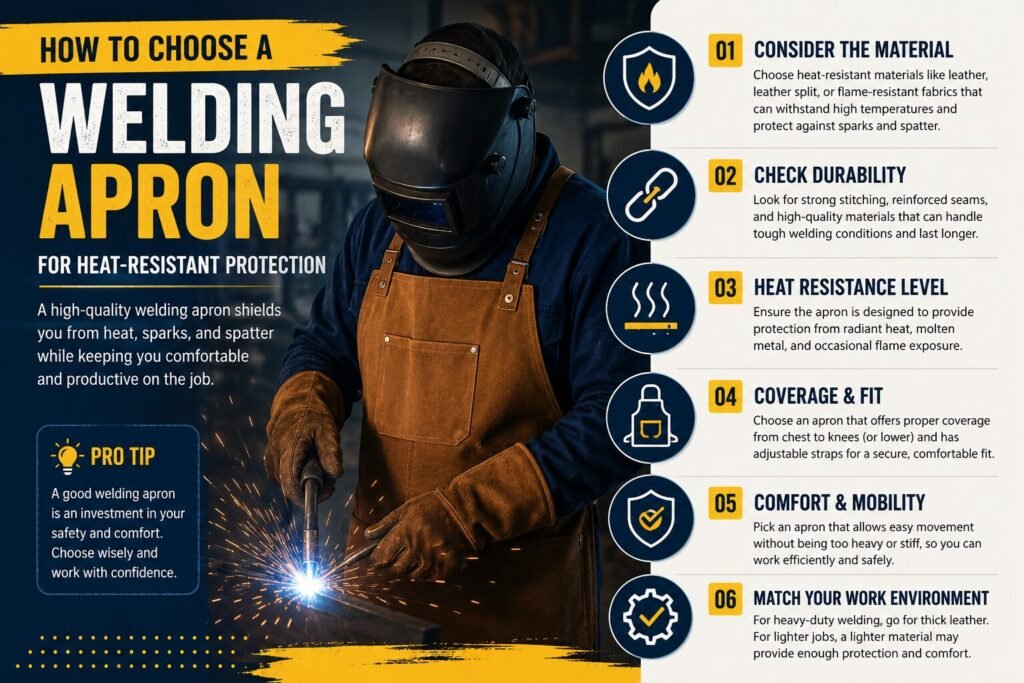
How to Choose a Welding Apron for Heat-Resistant Protection

In heavy industrial environments like welding bays, fabrication shops, and traditional blacksmith forges, workplace safety is a strict, non-negotiable requirement. Dealing with stray sparks, molten slag, and intense radiant heat means standard workwear can pose serious risks. To ensure maximum personal safety, choosing a dedicated welding apron heat resistant properties can offer is an absolute necessity. Understanding the key features of heavy-duty workshop gear allows you to make an informed, safety-first decision.
1. The Absolute Defense of Full-Grain Leather
When it comes to high-temperature thermal barriers, the grade of material you select dictates your level of protection. While lightweight synthetic fabrics or split-leather alternatives might look the part, they quickly degrade under constant exposure to high heat. A premium
Full-grain leather preserves the densest, outermost fiber structure of the hide, making it exceptionally resistant to punctures, friction, and burning. Instead of catching fire or melting when hit by stray grinding sparks or welding spatter, high-grade full-grain leather naturally insulates and deflects debris, keeping the wearer completely safe beneath the shield.
2. Built for Extreme Forging: The Blacksmith’s Choice
The intense operational demands of metalwork require gear that can withstand more than just sparks. A heavy-duty blacksmith leather apron must handle sharp metal shards, heavy tool friction, and close proximity to open forge heat. When choosing your gear, look for heavy-duty stitching—ideally utilizing heat-resistant Kevlar thread—and reinforced solid brass or copper rivets at critical stress points like pocket corners and strap attachments to prevent premature splitting.
The quality of construction is equally important when selecting protective workshop clothing. Even durable leather can become less effective if the seams, fasteners, straps, or other components are poorly designed. Inspecting the overall build quality before use can help identify whether an apron is suitable for the demands of a particular workshop environment. A properly constructed apron should complement other appropriate protective equipment rather than being treated as a substitute for it.
3. Strategic Coverage and Functional Layouts
A high-quality protective garment must offer optimal physical coverage without restricting your range of movement around heavy machinery. Ensure the length covers from the upper chest down to past the knees, safeguarding against dropping slag. Furthermore, tactical pocket placements should feature protective flaps or be angled outward to ensure flying sparks cannot accidentally fall inside and smolder against the material.
Workshop conditions can vary considerably depending on the type of work being performed. A fabricator working with welding equipment may have different coverage requirements from a blacksmith working directly beside a forge. Considering the specific tools, temperatures, materials, and movements involved in daily tasks can therefore help determine the most appropriate protective apron design. The right combination of material, coverage, fastening, and fit can contribute to safer and more comfortable working conditions.
4. Ergonomics and Weight Distribution
Because thick, industrial-grade protective leather carries some natural weight, look for adjustable, heavy-duty cross-back strap designs. This ergonomic layout shifts the pressure away from the back of the neck and distributes it evenly across the shoulders, preventing muscle fatigue during long, demanding shifts in the workshop.
Another important consideration is the apron’s ability to withstand repeated use in demanding workshop conditions. Protective leather should be inspected regularly for burns, deep cuts, worn stitching, damaged straps, or weakened fasteners, as these issues can reduce its protective performance. Keeping workshop gear clean, properly stored, and routinely checked helps maintain its condition and ensures that the apron continues to provide appropriate coverage during welding, fabrication, grinding, and forging tasks.
Conclusion
Cutting corners on safety wear is never an option when working with high temperatures and industrial tools. Investing in elite, premium leather protective gear ensures you stay safe, comfortable, and fully focused on your craft. Ready to upgrade your workshop safety setup with professional-grade solutions? Explore our heavy-duty collection at customapron.co.uk.

Free contributor opportunity
List your business, then unlock your own Guest Post.
Self-register for free and connect your expertise to a public business profile.