

If you’ve spent even ten minutes shopping for a leather bag or wallet, you’ve probably run into this wall of confusion: full grain, top grain, genuine, bonded, and somehow, every seller claims theirs is “the best kind.” Add a hefty price tag to the word full grain, and most consumers go ahead and think that if it’s expensive, then it must be good.
It doesn’t. And that’s the problem this guide is here to solve without any sales pitch.
What Is Full Grain Leather, Really?
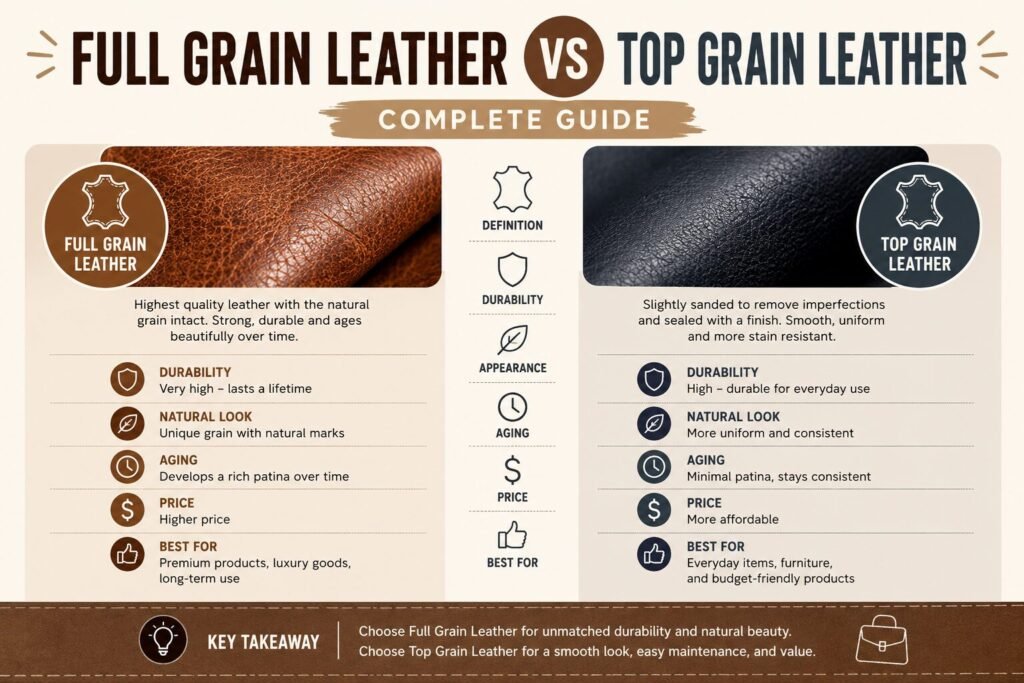
The highest quality leather is made from full grain leather and is the outermost part of the hide that is used right out of the animal, in its proper grain. No sanding or buffing is avoided. This will keep the natural texture of the stones (small bumps) visible.
The upside? The toughest and most resilient part of the hide. Over time, it takes on a lovely “hatch” and even with use can last for decades with care.
The secret most sellers don’t divulge? Full grain doesn’t have to cost as much as luxury to be real. Proper tanning and honest sourcing are all that is required, not a designer mark-up imposed on top.
What Is Top Grain Leather, Really?
Top grain leather is also a type of genuine leather but comes one layer below full grain. The topmost surface is lightly sanded and refinished to eliminate any imperfections for a smoother and more even appearance.
This gives top grain a bit more flexibility, makes it easier to work with for structured designs, and may help to prevent staining as a result of the finished coating. It’s not “fake” or “lesser” leather; it’s just that it’s treated differently to create a consistent, cleaner finish.
The thing that most people will be surprised by is that while top grain is not as tough as full grain, it can be just as tough when it comes to everyday wear in bags, wallets, and belts that are worn every day. The difference is more about texture and finish rather than whether or not the leather is “real”.
The Real Problem: Pricing Has Nothing to Do with Quality Anymore
This is where most of the leather industry gets it wrong. Somewhere along the way, “full grain” became a marketing word instead of a material description. Brands put it on a price tag, slap on a premium logo, and expect consumers to pay three times the price, even though the quality of the hide and how it would be tanned would be almost the same.
The truth is simple: both full grain and top grain leather can be excellent, long-lasting materials. What actually determines quality is:
- How the hide was tanned
- How well the edges and stitching are finished
- How the leather is treated and cared for after purchase
None of these things require a luxury price. They require a brand that actually cares about craftsmanship over markup.
Full Grain vs Top Grain: Which One Should You Actually Buy?
Here’s the honest, no-fluff answer.
Choose full grain if you want maximum durability, natural texture, and don’t mind the leather showing character (scratches, grain marks) as it ages. It’s ideal for bags, boots, and belts you plan to use hard for years.
Choose top grain if you want a more refined, polished appearance, increased stain resistance and uniformity in finish among all items. Great for use on a daily basis in leather bags and wallets, particularly for those that are structured.
Neither one is the “cheap” or “fake” option. Both are genuine leather. The only real difference is finish and feel, not authenticity, and definitely not value for money.
Why “Expensive” Leather Isn’t the Same as “Good” Leather
A huge chunk of what you pay at big-name leather retailers isn’t going into the hide at all — it’s going into:
- Retail store rent
- Celebrity or influencer marketing
- Brand packaging and “heritage” storytelling
- Layers of distributor markup before it reaches you
None of that touches the leather in your hands. It’s entirely possible to get full grain or top grain leather, properly tanned and well-stitched, at a fraction of what luxury brands charge — simply by buying from a brand that sells direct and skips the unnecessary markup.
That’s the space we created to fill when we created our brand. When most leather bag companies out there would charge a designer rate on a simple leather full-grain satchel, affordable doesn’t have to mean low quality; it just means cutting the expenses that weren’t really worth adding to your leather bag in the first place.
How to Check Leather Quality Without Overpaying?
Next time you’re shopping, skip the price tag as your first filter and check these instead:
Ask for the leather type clearly
Full grain, top grain, or something else. A trustworthy seller will always tell you straight.
Look at the edges and stitching
The quality is a greater indicator than the cost if the edges are clean and sealed.
Touch test
Even the cheaper coated synthetic leathers are not the same as genuine leather.
Compare across sellers
The price of leather is not determined by the quality of the leather itself, but by how much the brand mark-up is.
Regional manufacturers too, like an Alaskan Leather Company using rugged, functional hides for outdoor products, demonstrate that quality leather craftsmanship needn’t be confined to the big luxury brands. There is good tanning and good stitching that is not at the premium price.
The Bottom Line
Full grain leather is both true and tough, and can last for years if it’s constructed properly. Top grain leather is just as true and tough, and again can be expected to last for many years if properly constructed. The notion that quality leather is ‘luxury leather’ is nothing more than a belief, not a reality.
If you know what makes leather good- the tanning, the finish, the stitching- then you’re paying for the material, not the story. That’s when

Anzac Shaw writes about waste management, recycling, and sustainable business practices, sharing practical insights and industry knowledge.
Free contributor opportunity
List your business, then unlock your own Guest Post.
Self-register for free and connect your expertise to a public business profile.