
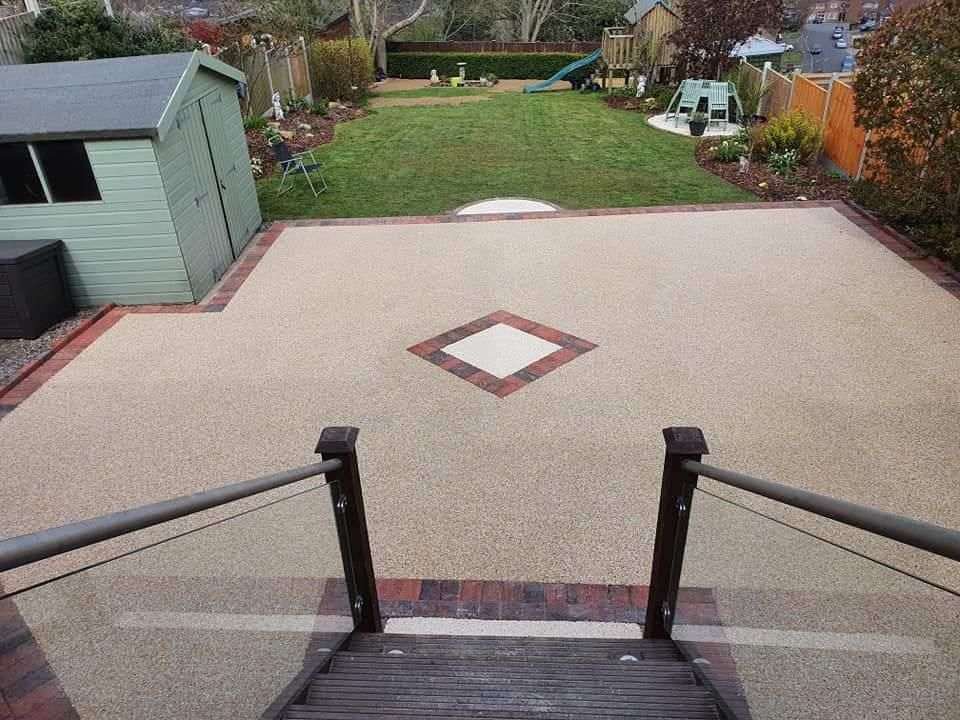
When it comes to choosing the right surfacing for your driveway, car park, or commercial property, the decision often comes down to two popular options: Tarmac Surfacing and Resin Bound Surfacing. Both offer distinct advantages, but understanding their differences is essential for making an informed choice that balances durability, aesthetics, and budget.
This comprehensive guide from 1st Choice Surfacing explores the key features, benefits, and considerations of both surfacing solutions, helping you determine which option best suits your property’s needs. As experienced surfacing contractors serving clients across West Yorkshire, Leeds, Bradford, and beyond , we understand the importance of a surface that combines functionality with visual appeal.
Understanding Tarmac Surfacing
Tarmac Surfacing, also known as tarmacadam, is a proven surfacing material made by mixing crushed stone aggregate with a binder, traditionally tar, though modern versions typically use bitumen . This combination creates a durable, weather-resistant surface that has been trusted for decades across the UK.
Key Benefits of Tarmac Surfacing
Durability and Longevity: Tarmac is exceptionally hard-wearing and suitable for all weather conditions . A properly laid tarmac surface can last between 12 and 20 years, depending on usage and maintenance . It can withstand heavy loads, making it ideal for commercial properties with frequent vehicle traffic, including trucks and vans .
Cost-Effective Installation: Tarmac is generally more affordable to install than many alternative surfacing options, offering excellent value for money—particularly for larger areas where cost per square metre becomes a significant factor .
Low Maintenance: Maintaining a tarmac surface is straightforward. Regular sweeping and an occasional pressure wash twice a year are typically all that’s required . Minor cracks can be easily repaired before they develop into more significant issues .
Fast Installation: Tarmac is a quick-drying surface option, minimising disruption during installation . This is particularly important for commercial properties where downtime can impact business operations .
Versatility: While traditionally black, tarmac can now be mixed with pigments to create a range of colours , and decorative chips can be scattered across the surface for added visual interest .
Common Tarmac Applications
As a versatile surfacing material, tarmac is widely used for car parks, driveways, footpaths, roadways, shared accesses, schools, hospitals, country estates, farms, leisure parks, and more . At 1st Choice Surfacing, we specialise in commercial, industrial, and public sector tarmac projects across West Yorkshire .
Exploring Resin Bound Surfacing
Resin Bound Surfacing has gained significant popularity in recent years as a modern, aesthetically pleasing alternative to traditional tarmac. This system mixes natural aggregate with a clear polyurethane resin in a forced action mixer, ensuring each particle of stone is fully coated . The mixture is then hand-trowelled onto a prepared base to create a smooth, flat finish .
Key Benefits of Resin Bound Surfacing
Aesthetic Appeal: Resin bound surfacing offers exceptional visual appeal with a vast range of aggregate colours and blends available, from traditional earthy tones to contemporary greys and blues . Over 75 different gravel blends are available to meet specification needs, providing unparalleled design flexibility .
SuDS Compliance: One of the standout features of resin bound surfacing is its permeability. The open matrix allows water to drain through the surface, reducing the risk of flooding and helping to manage surface water runoff . This makes it an environmentally responsible choice for driveways and car parks.
Low Maintenance: Resin bound surfaces require minimal upkeep, with no weeding or re-sanding required . Regular sweeping and occasional cleaning are typically sufficient to maintain the surface’s appearance.
Durability and UV Stability: When mixed with UV-stable resin, resin bound surfacing will not fade or alter when exposed to UV rays, ensuring the colour remains vibrant for years . The surface is also slip-resistant, enhancing safety for pedestrians .
Long Lifespan: Resin bound surfacing is designed to last over 25 years when properly installed and maintained , making it a long-term investment for homeowners and businesses alike.
Tarmac Surfacing vs. Resin Bound Surfacing: A Head-to-Head Comparison
Cost Comparison
Tarmac is generally the more cost-effective option for larger areas, offering excellent value for money. Resin bound surfacing commands a higher initial cost due to the premium materials and skilled installation required. However, its longevity and reduced maintenance needs can offset the upfront investment over time.
Durability and Load-Bearing Capacity
Tarmac is exceptionally durable and can withstand heavy loads, making it the preferred choice for commercial and industrial applications where heavy vehicles are present. Resin bound surfacing is suitable for foot traffic and occasional vehicle traffic, such as domestic driveways , but may not be appropriate for heavy volumes of commercial traffic .
Aesthetic Versatility
Resin bound surfacing offers superior aesthetic versatility, with over 75 aggregate blends and a wide range of colours to choose from . Tarmac, while available in colours, has more limited design options, though decorative chips can be added for visual interest .
Permeability and Drainage
Resin bound surfacing is fully permeable, making it a SuDS-compliant solution that reduces flood risk . Tarmac can be porous depending on the mix used, but it doesn’t offer the same level of permeability as resin bound surfacing.
Installation and Maintenance
Tarmac installation is faster and less weather-dependent than resin bound surfacing. While tarmac can’t be laid in wet weather , it dries quickly and allows for rapid use. Resin bound surfacing requires precise conditions for installation (minimum 5°C, rising) and cannot be applied during rain . Both surfaces are low maintenance, though resin requires specialised cleaning to avoid damaging the binder.
Making Your Choice: Which Option is Right for You?
Choose Tarmac Surfacing If:
-
You have a large area to surface (e.g., car park, access road)
-
Your property experiences heavy vehicle traffic
-
You require a cost-effective solution
-
You need a fast installation with minimal downtime
-
A traditional, functional appearance is acceptable
At 1st Choice Surfacing, our commercial asphalt services are designed to provide dependable, durable surfacing for businesses across the UK, with a focus on quality and safety .
Choose Resin Bound Surfacing If:
-
Aesthetic appeal is a priority
-
You want a wide range of colour and finish options
-
Drainage and permeability are important (SuDS compliance)
-
The area is primarily for pedestrian or light vehicle use
-
You are prepared for a higher initial investment
Professional Installation: The Key to Longevity
The performance of both Tarmac Surfacing and Resin Bound Surfacing depends heavily on the quality of installation. With over 14 years of experience in the surfacing industry , our team at 1st Choice Surfacing ensures every project meets the highest standards of quality and safety. Our commitment to using premium materials and providing expert workmanship sets us apart .
We maintain CHAS accreditation, are registered with Constructionline, hold CSCS cards across our site teams, and are members of the Guild of Master Craftsmen . This accreditation provides peace of mind that your project is in expert hands.
Read more articles at: https://thesportsangel.com/
Conclusion
Choosing between Tarmac Surfacing and Resin Bound Surfacing ultimately depends on your specific requirements, budget, and aesthetic preferences. Tarmac offers exceptional durability, cost-effectiveness, and suitability for high-traffic areas. Resin bound surfacing provides superior aesthetic versatility, permeability, and a modern, premium finish.
At 1st Choice Surfacing, we can help you navigate this decision, providing expert guidance and professional installation tailored to your property’s needs. Contact us today for a free site survey and discover the perfect surfacing solution for your home or business.
FAQs
Q: What is the main difference between tarmac and resin bound surfacing?
Tarmac is a traditional, durable surfacing material made from aggregate and bitumen, ideal for heavy traffic areas. Resin bound surfacing combines aggregate with resin to create a permeable, aesthetically versatile surface suitable for driveways and light vehicle areas.
Q: Which option is more cost-effective?
Tarmac is generally more cost-effective upfront, especially for larger areas. Resin bound surfacing has a higher initial cost but offers superior longevity and aesthetic versatility, potentially providing better value over the long term.
Q: Is resin bound surfacing suitable for commercial use?
Resin bound surfacing is suitable for light commercial use and domestic driveways . However, it may not withstand heavy volumes of commercial traffic as effectively as tarmac, which is specifically designed for high-traffic commercial applications .
Q: How long does tarmac surfacing take to dry?
Tarmac can typically be walked on within 24 hours and driven on after around 48 hours, depending on weather conditions . Drying time depends on factors such as the surface thickness and moisture levels.
Q: Can tarmac be laid in the rain?
It is not ideal to lay tarmac in wet weather, as moisture can affect how well the surface binds . Professional installers will schedule installation for dry conditions to ensure a safe, lasting finish.
Contact 1st Choice Surfacing:
Phone: +441132549638
Email: info@1stchoicesurfacing.co.uk
Address: 11 Chatsworth Rd, Pudsey LS28 8JS
Read more articles at: https://thesportsangel.com/
View our listing: https://thesportsangel.com/business/1st-choice-surfacing-ltd/